
The Anxious Majority
To fight tyranny, we have to help one another confront our fears of the unknown.
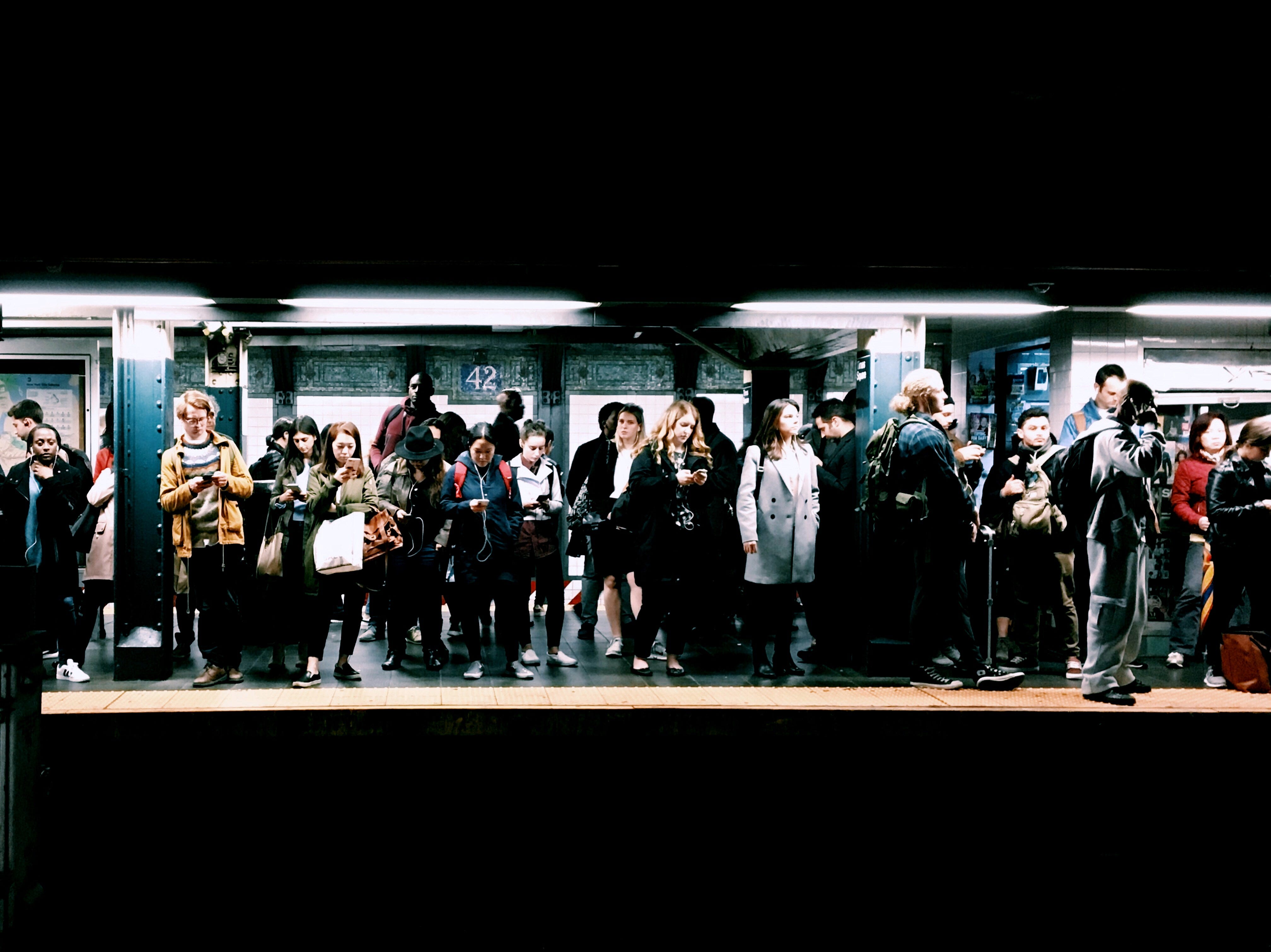
Now that we’ve elected our socialist mayor, New York is waiting for the paramilitary invasion that is almost certainly coming when Zohran takes office in January. Many on the left are not just waiting, of course. We’re getting trained, organizing against the already increased ICE presence, and learning from the inspiring resistance in Chicago, Charlotte, and elsewhere. But we’re not in the full shitstorm yet, which makes this valuable time to reflect on what’s to come.
In that spirit, I’m dusting off something I tried writing over a year ago, about the different responses to the Gaza encampment on my campus. Like the piece I wrote recently about a debate in my union, the theme here is how lefties can better bridge the gap between ourselves and people not yet with us but about recognizing not only the political ideas but the emotions and identifications that often separate us. The encampments were a moment of tremendous excitement for the Palestine solidarity movement, but also of frustration–with the maniacal pro-Israel establishment of course, but also with the sympathetic yet passive response of many in our communities. In this essay, I use my own paradoxical emotions as a way of relating to the prevailing wish that everything could just return to a normal that is permanently gone.
Come January, I have no doubt that thousands of New Yorkers will spring into action in defense of their communities, including many who have never thought of themselves as “activists.” Far more will be sympathetic but, for a variety of reasons, passive. We’ll have to find ways to bring them into The Resistance (a previously cringe term that is totally appropriate for people facing off against armed storm troopers in their neighborhoods) and not succumb, under the enormous stress of repression, to feelings of resentment that they aren’t already with us.
I started this blog in large part to have somewhere to write pieces like this: personal, awkward, not totally sure what I’m trying to say. Feel free to respond in the comments with thoughts and reactions.
There was a Gaza solidarity encampment at my college last week. It started during spring break when I was out of town, but I was able to go with my 14-year-old on the final day of the vacation–which nobody knew would also be the encampment’s last day.
It was “safe”, of course: some people sitting in tents, others listening to speakers in the middle of the campus quad. I joined some other faculty holding a picket, made some new friends and connected with some old ones while my kid wandered around the scene, mostly inspired, a little bored. Then we went home, a few hours before the police invaded.
They were violent, of course. For supporters of the Palestine movement–watching videos of protesters being pepper sprayed, manhandled, and hauled off to jail–the repression was obviously more dangerous than the encampment. On the other hand, for people who think that words like “Palestine” and “Muslim” and half of the Arabic language are various ways to express a desire to kill Jews or implement sharia law, I’m sure the crackdown made them feel safer.
Today, I’m more interested in the majority of people on this campus and surrounding community, who I think feel elements of both. Not because they’re caught between extremists on both sides, and long for someone to speak for the reasonable center (“Israel should genocide, but not too much.”) In my experience, students here are overwhelmingly and deeply opposed to Israel’s actions, and while the sentiment is not as widespread among the (older and whiter) entire campus community, the general vibe here definitely reflects the increasingly Palestine-sympathetic politics of your typical Democratic voter.
What I mean, then, is that the uncommitted majority shares with our side the understanding that the protests were peaceful and the crackdown unjust, but shares with the other side’s anxiety over protests. For this majority, the encampment presented a prospect of unpredictable disruption. Suddenly, there would be an ongoing confrontation in the middle of campus–a nonviolent but defiant new force challenging not just foreign policy but the daily order imposed by university rules and campus security.
I wish I could say that I didn’t share the anxiety. But as I headed to the encampment, I was a ball of nerves. I had no concerns about dangerous protesters, of course. And I wasn’t worried about imminent police violence (naively, it turned out). What had my butterflies going was the understanding that these students had just ratcheted up the level of urgency and immediacy about the ongoing horrors in Gaza.
Wasn’t this what I wanted? Yes it was. I had gone to many demonstrations since October 7, helped cohere a small network of campus Jewish anti-zionists, and made sure to have class discussions about “the Middle East” despite having no job security in an intense climate of censorship. I’ve been an outspoken leftist for many years.
But over that long time, I’ve grown less comfortable with situations I can’t control. The encampment posed serious questions for the middle aged and middle class life I’ve carefully constructed: How would I throw myself into solidarity work while keeping up with my multiple jobs? What if I get doxxed and lose one or all of them? Actually, I wish my anxiety was fueled by questions as specific and rational as those. If I’m being honest with myself (and you), it was my knowledge that a new phase of the movement was about to begin, an escalation I had to take part in, without knowing the outcome.
I’m a radical who likes his routines. In times of serious struggle, I am ebullient one moment, a nervous wreck the next.. The analytical parts of my brain see that human society moves forward and backward in dramatic and dangerous violent leaps. The anxious parts of my brain wish that it actually worked the way we are taught, through slow and cautious change, where reason ultimately prevails. I have waited decades for the Palestine solidarity movement to reach the heights it’s now at, where it can threaten the US imperial status quo in ways that scare me to death
And just like that, it was gone. Before I could get my head right and figure out how I could dive in and support, people returned to campus and could even find out how they would respond to the encampment, it was disappeared into holding cells and possibly suspensions and expulsions. Many of us are devastated. Others are celebrating. But almost all will now go back to normal. Back to funding an army that raids a hospital, shoots people in the head and dumps them in a mass grave. Back to not being confronted with how frightened we are of anything different. Many will return with a sigh of relief that we may or may not acknowledge.
In fact, nothing is normal. The campus is closed, classes are all online, and they won’t tell us why or when we’re allowed back on campus. When we are, security will undoubtedly be tighter. [Note: I wrote a piece for the Indypendent soon after about the shitshow that the rest of the semester turned out to be.]
But there is something, if not normal, that at least familiar feeling about things getting worse, slowly for the most part, but sometimes all at once. Class sizes get larger, prices go up more than our pay, police powers increase, supposedly in response to an emergency but never being revoked long after the triggering event.
The whole point of disruptive protests is to take the injustices we quietly endure every day and throw them noisily across people’s paths on their way to work or running errands. They aim for discomfort, to safely replicate the real dangers that we are trying to end. In almost all instances, the only time protests become actually unsafe is when the police arrive to put an end to the “disorder.”
Protest organizers are correct when we argue that our opponents or some bystanders feeling discomfort doesn’t mean that they are facing any actual danger. But this isn’t as obvious as we want it to be. Many neutral or sympathetic observers who know the logical order of events, that the protests were peaceful until the police were called in, can be swayed by the opposite narrative because of the uneasy emotional response they have to unpredictable conflict: none of this would have happened if it weren’t for the protests.
And this isn’t wrong. Even the most peaceful encampment is intended as a provocation–a demand not only on those in power but everyone else who hasn’t taken sufficient steps to fight that power. It’s a challenge to all: opponents, neutrals, and supporters like me: people are being slaughtered and what are you doing about it? This is the question bouncing around my head on my way to the encampment. I could feel the clock speeding up, the movement escaping my ability to dictate when and where I would be involved.
Now we can relax, thanks to the college administration and the NYPD. Do we feel safer today, now that the people trying to protest a genocide have been carted off? Do we feel safer having classes on Zoom, where we’ll barely learn anything? Will we be better if we don’t talk in class about what just happened? I won’t lose my job and nobody will have to feel uncomfortable.
In a way, many of us are now more safe, but only in the bleakest sense of that word. The future is grey but predictable, the safety promised by dictators. We know what the rest of the semester will look like: the crackdown will make things more chaotic and dysfunctional, but only an increase of the chaos and dysfunction we are used to at the underfunded public university.
To fight for something different, more of us will need to develop the courage to embrace the wider possibilities of the unknown.
This piece is a downer because it was written at a very depressing moment. As ominous as things are looking right now, the widespread community mobilizations across the country have me feeling inspired and even (by my low standards) courageous. Hold me to that.
I love the honesty and self-interrogation of this piece, Danny. You are such a wonderful writer and thinker. It's true that many New Yorkers are now mobilizing, doing trainings, getting ready for what's sure to come - and this may be encouraged by Zohran's victory and benefit from the canvassing teams already formed. But it's somewhat independent too, folks trying to learn from LA, Charlotte, Chicago. All the ambivalent, frightened, determined and stalwart feelings you evoke in your piece on the encampment are very present. Thanks so much.
Thanks, comrade. I don't know if the Mamdani Army is still on standby. If some of your colleagues have learned as much as you've described, I hope they can take leading roles to get that army organized and ready to fight Trump whether their mayor calls them up or not.